
All That We Allow
things are just as they are

The kernel of this essay is the still image from the 1950’s melodrama, All That Heaven Allows: an older woman looking at her reflection in a TV screen. I saw this Douglas Sirk movie for the first time decades ago and this particular image stuck with me. Apt for our times, and I thought I would write about screens and their deleterious effects, but happily the essay is not that dull!
It’s about a delicious morning without screens but it’s also about sons misunderstanding what their mothers really need, running away with the gardener; a cabin, a cat and a writing desk, and how understanding matters and how it absolutely doesn’t.

I did something amazing the other day. I read a literary journal while eating breakfast. I did it before checking my phone, before listening to a podcast, before reading the news. I read Lapham’s Quarterly, volume 12, number 1, Winter 2020. The theme was Memory.
What I remember hardly happened, what they say happened I hardly remember. ~Linda Pastan, 1982.
Well, I am old enough to remember black and white TV and three channels, my father’s big bubble-shaped Ford without seatbelts, summers with “nothing to do” but read, ride bikes, and play outside with a gang of neighborhood children.
It was not idyllic but it was less distracted by screens, though the spawn of distraction squatted in the middle of our living room, hypnotizing us with its single eye.
All That Heaven Allows, directed by Douglas Sirk, is a 1955 melodrama about a love affair between a wealthy socialite and widow, Carrie Scott (Jane Wyman), and her gardener, Ron Kirby (Rock Hudson). This relationship of lopsided status stirs up a Wasps’ nest of consternation among family and friends. When Carrie brings Ron to a country club event, they endure withering judgements from “friends” and she is assaulted in the coat room by someone’s drunken husband who thinks her relationship with the help signals she’s fair game. Ron has to punch him in the face.
Her grown children are embarrassed because their mother has a sex life, as her son sullenly tells her in this piece of movie dialogue:
Ned: “Listen, mother, somebody in this family has to think straight.”
Carrie: “And you don’t think I can?”
Ned: “I think all you see is a good looking set of muscles.”
Carrie: “Why, Ned!
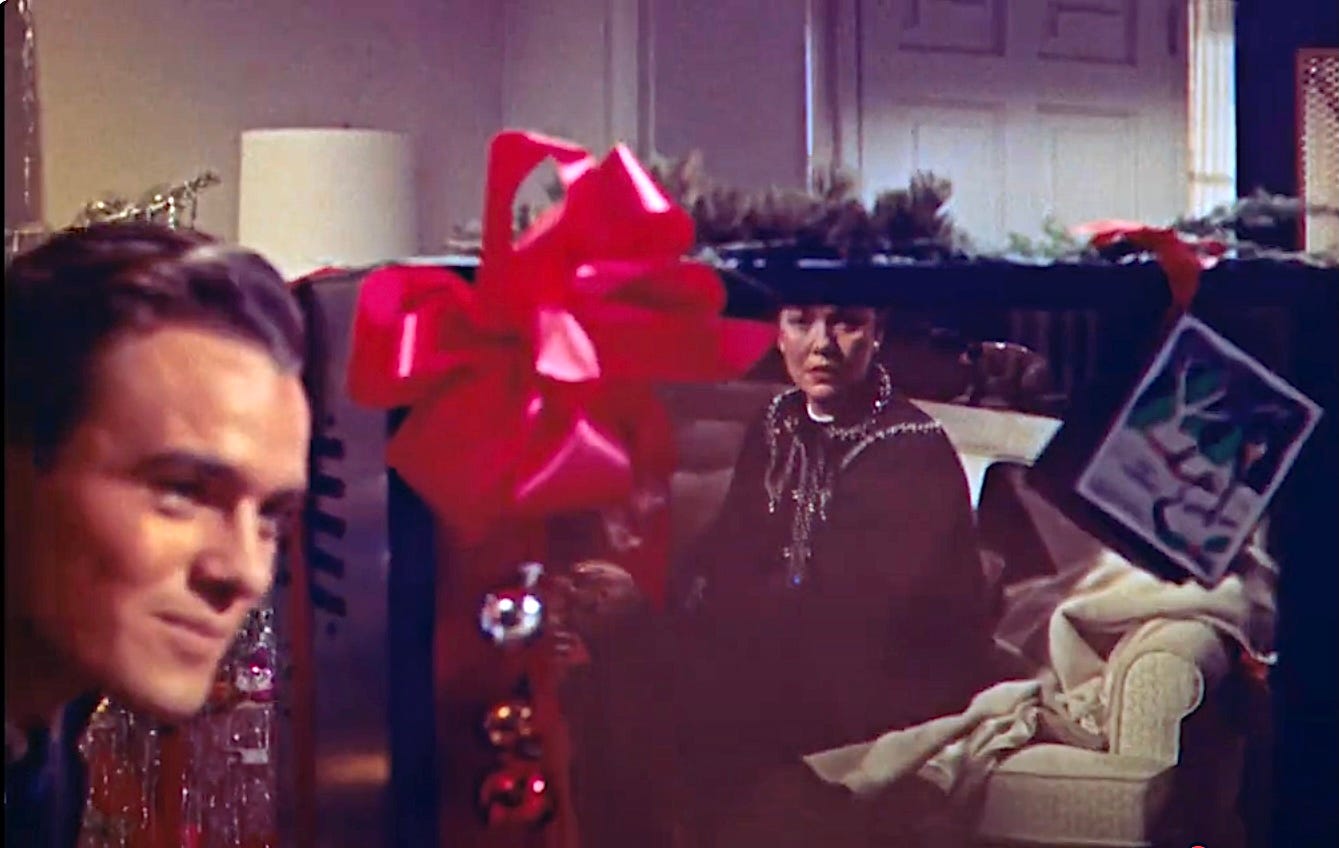
Later, after Carrie has given up the gardener and his good-looking set of muscles, Ned presents her with a brand new TV the day he leaves for college. Now she can sit alone in her empty house and watch TV for the rest of her life because...
“All you have to do is turn that dial and you have all the company you want right there on the screen: drama, comedy, life’s parade at your fingertips.” ~from All That Heaven Allows
My life imitated this piece of movie art when my sons gave me my first large smart screen. I didn’t have to give up a good-looking set of muscles to get one. I didn’t even ask. It was a birthday present, but similar to Ned, they were concerned about me being alone. Every night I sat in front of it to the exclusion of doing anything else, like read, call a friend, or write. I eventually gave it away.
The truth is, when a big screen squats in my living room I sit in worship every night and watch just about anything. And if I don’t watch just anything it’s not for lack of trying. I spend plenty of time looking for anything. There‘s no middle ground. Which is why I no longer have a screen in my living room.
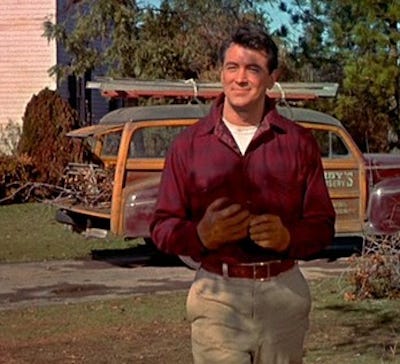
I’d rather run away with the gardener, or at the very least garden, if only I could stop looking at screens, because not having a big one in my living room does not prevent me from looking at the small one in my pocket, or the laptop on my desk.
I subscribe on and off to Netflix (The Diplomat) or Apple TV (Pluribus), watch HBO Max (or Max, or Max HBO or whatever they call it now…!) and sometimes Prime (I virtuously do not subscribe just use my son’s subscription).
“How you start your day is how you live your day. How you live your day is how you live your life.” ~Louise Hay
I believe that, and it’s still difficult to start the day without looking at my phone, despite the thrill of starting it with Lapham’s Quarterly, volume 12, number 1, Winter 2020.
The original idea for this essay was sparked by that image of Carrie looking at her reflection in a blank screen: a metaphor for loneliness in later life and screens as a poor substitute for human connection—even though I also dream about living alone in a cabin with a garden, a cat, a wood stove and a writing desk.
We want what we want when we want it.
Watching screens is not the problem. Managing the addiction to watching screens to avoid loneliness is not the solution.
“If you understand, things are just as they are. If you do not understand, things are just as they are.” ~Zen proverb
fini
If you don’t want to commit to a subscription but found this post meaningful, you can drop a contribution here: buymeacoffee.com/valeriespan.
* I am passionate writer and poet on Substack.
* A mindfulness teacher on Insight Timer offering guided meditations and talks. Download the app for access to an amazing array of free and premium content, including mine!
*I’m a life & executive coach with a niche helping women navigate the consequences of leaving an abusive workplaces. Message me here or on LinkedIn to schedule a free initial meeting and learn more.
NOTE regarding AI use: I never use AI in any part of my writing process: from conceiving and nurturing ideas, to editing drafts, to writing the final essay. This is the work of one human doing her best to write essays and poetry on a somewhat regular schedule. We don’t need more content, we need heart-centered human content. Sometimes that takes longer.